
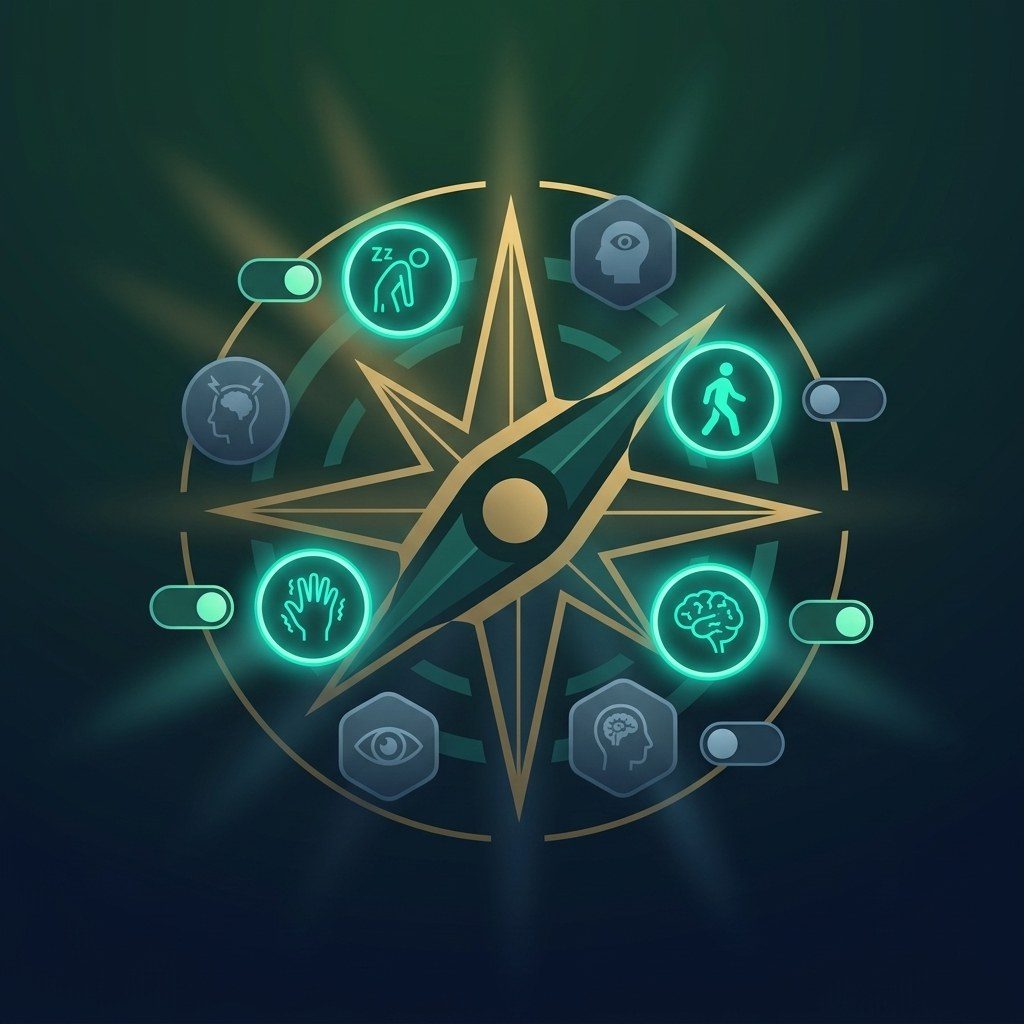
MS doesn't follow a script. Two people with the same diagnosis can have completely different days — one weighed down by bladder symptoms and brain fog, another barely noticing either but floored by heat and spasticity in their legs.
For a tracking app, that's the whole problem. A fixed list of symptoms asks everyone the same questions, and for most people, most of them are the wrong questions.
Version 1.14 is our answer to that.
Hide the symptoms that aren't yours
You can now switch off any symptom you don't want to track. Go to Profile → Tracked Metrics and turn off whatever doesn't apply to you. Hidden symptoms disappear from your daily tracking — and from your AI reports too, so your analysis is never skewed by a metric you never really had.
If you'd rather do it as you go, the daily tracker now has a Not relevant to me button on every symptom. One tap and it's gone from your list, from that day onward. No menus, no settings — tomorrow's form is simply shorter.
For a lot of people, that's the difference between a two-minute daily habit and one that quietly fades away.
Track what your MS actually does
The standard list doesn't cover everything. So you can now add your own metrics under Profile → Custom Metrics, and they'll appear in your daily tracking right alongside the built-in symptoms.
Each one can be:
- A 0–10 scale — for anything you can rate, like "Fatigue after meals"
- A number — for counts and amounts, like naps taken or flights of stairs that felt hard
- Text — for notes you want to keep structured over time
They're yours. A trigger food, a symptom your neurologist is watching, a side effect from a new treatment — if it matters to you, it belongs in your log.
What else is new in 1.14
- No more ads. NeuroHelm is now completely ad-free.
- Weekly AI insights are free for everyone. Your first one arrives after three tracked days, instead of a month of waiting.
- Reminders that actually arrive. Daily and supplement reminders keep working even if you haven't opened the app for a few days.
- Relapse tracking. Log a relapse in the Health Log, and when it's over, mark your recovery straight from the daily tracker.
- A faster start. Setup takes you directly to your first log, and the tracker only asks the questions that apply to you.
Why this matters
The point of tracking was never the tracking. It's the pattern you can see three months from now — the one you bring to your neurologist and say: this is what my year actually looked like.
That only works if the data is really yours. Your symptoms, in your words, without the noise of questions that were never about you.
Open your profile and give it two minutes. Tomorrow's log will be shorter — and every one after that will be worth more.
Android version may be found here: https://play.google.com/store/apps/details?id=com.neurocompass.app